
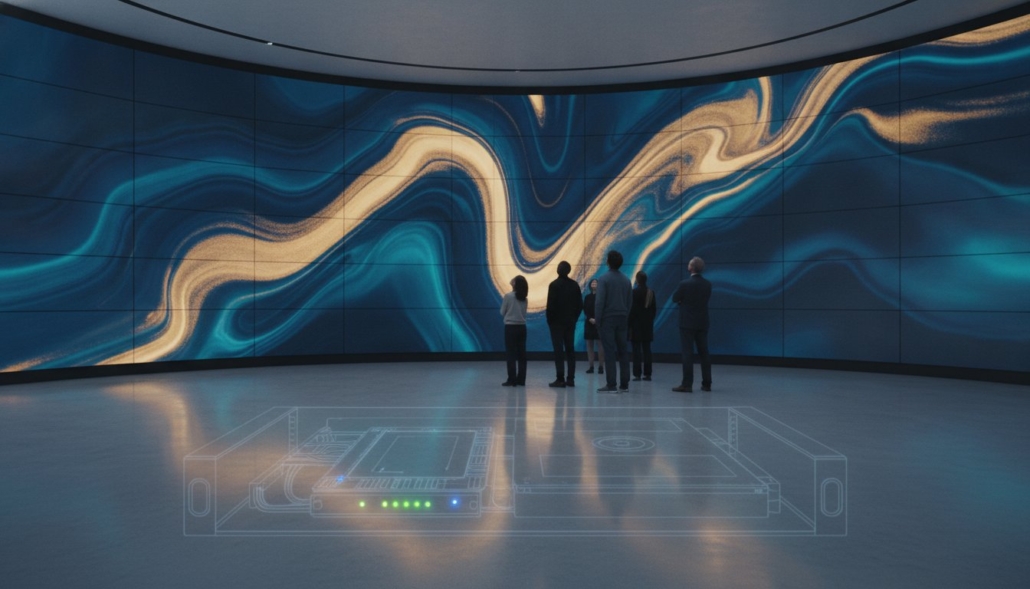
Retail Video Wall Processors: 2026 Immersive Display Guide
Your retail environment is only as authoritative as its most visible failure. In an era where the global LED video wall market is surging toward $8.1 billion, a single misaligned bezel or a system crash during peak shopping hours can instantly erode customer trust. You’ve likely struggled with the complexity of managing high-resolution assets or watched as a stretched logo distorted your brand’s carefully crafted image. Finding the right video wall processor for retail is the difference between a high-impact flagship store and a technical liability. You need hardware that delivers seamless visuals and 24/7 reliability without requiring a full-time engineering team on-site.
This 2026 guide breaks down the essential hardware specifications and system architectures needed to drive immersive retail displays. We’ll show you how to leverage professional-grade solutions like the WolfPack modular series to achieve zero-latency engagement and simplified content management. You’ll gain a clear understanding of current HDMI and DisplayPort 2.1 standards, ensuring your infrastructure is ready for the next generation of high-resolution media. From pixel pitch considerations to AI-driven orchestration, this is your roadmap to building a dependable, scalable visual ecosystem that commands attention.
Key Takeaways
- Understand why a dedicated video wall processor for retail is essential for maintaining precise brand aspect ratios and resolution across large-scale storefront displays.
- Identify the critical technical specifications, including 4K at 60Hz and 4:4:4 Chroma Subsampling, required for fluid motion and crisp text in digital signage.
- Learn to distinguish between standard matrix switchers and dedicated processors to select the most efficient hardware architecture for your store’s layout.
- Discover how to optimize retail configurations, from traditional 2×2 grids to creative vertical “end-cap” mosaics, for maximum visual impact.
- Explore professional-grade implementation strategies using WolfPack technology to ensure 24/7 operational stability and seamless system integration.
What is a Video Wall Processor for Retail and Why Do You Need One?
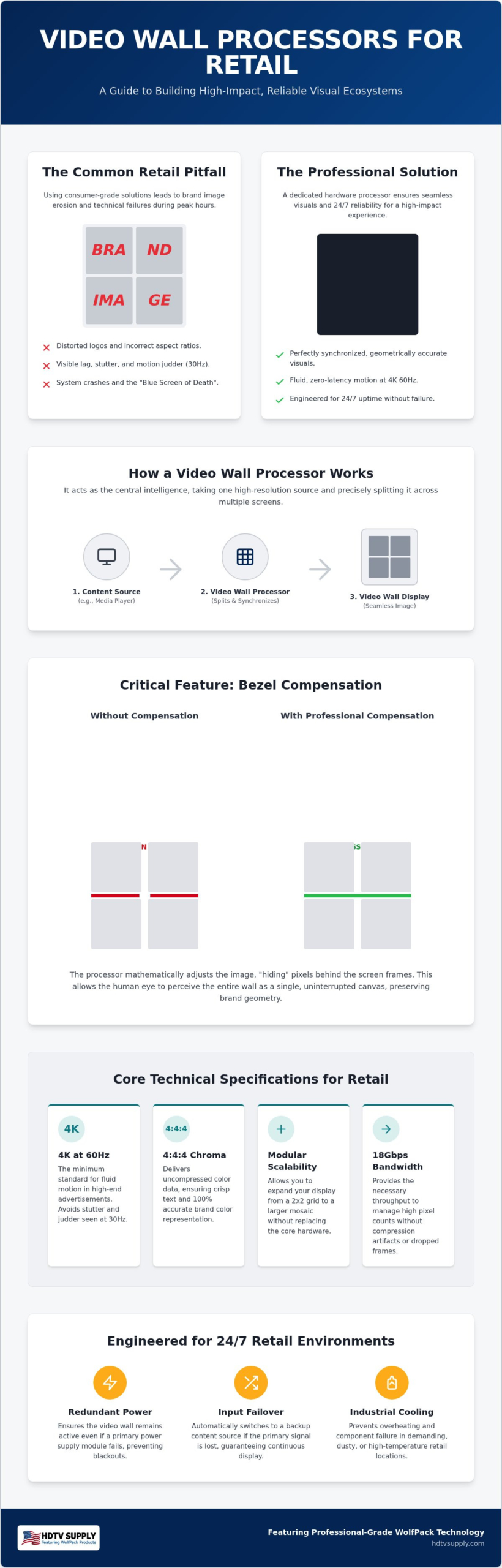
A professional video wall processor is a dedicated hardware unit designed to ingest a single high-resolution video signal and split it across multiple displays. It functions as the central intelligence of your visual array, ensuring that content remains synchronized and geometrically accurate. While consumer-grade solutions exist, a video wall processor for retail is built specifically to handle the rigorous demands of commercial environments. Understanding What is a Video Wall architecture helps explain why standard splitters or daisy-chaining methods fall short of professional standards.
Retailers often attempt to daisy-chain televisions using internal loop-through features. This approach typically fails to meet aesthetic requirements. It limits resolution, introduces lag, and creates significant distortion across the screen grid. A hardware-based processor eliminates these issues by providing high-speed, real-time data distribution. Unlike software-based controllers that rely on a PC operating system, hardware processors use dedicated circuitry for near-instant boot times and zero-latency performance. This technical superiority is essential for maintaining brand authority in high-traffic storefronts.
The Role of Bezel Compensation in Retail Displays
Bezel compensation is the mathematical adjustment of an image to account for the physical gap between monitors. Without this feature, straight lines appear disconnected and fluid motion looks staggered as it passes from one screen to the next. For luxury fashion and high-end retail, this “broken” visual is unacceptable. Professional processors “hide” specific pixels behind the screen frames, which allows the human eye to perceive the entire wall as a single, seamless canvas. This precision ensures that brand logos and product photography maintain their intended geometry without distracting interruptions.
Reliability Factors for 24/7 Retail Environments
Flagship stores require 24/7 operational stability. Hardware-based processors are engineered with industrial-grade thermal management systems that far exceed the cooling capabilities of consumer devices. They are designed to run indefinitely without the risk of system crashes or the dreaded “Blue Screen of Death” common in PC-based setups. Key reliability features include:
- Redundant Power Supplies: Ensures the wall stays active even if a primary power module fails.
- Input Failover: Automatically switches to a backup content source if the primary signal is lost.
- Passive Cooling: Minimizes moving parts to reduce the likelihood of mechanical failure in dusty retail environments.
Choosing a dedicated hardware solution provides the peace of mind that your visual branding remains consistent, regardless of shopping hours or environmental conditions. Deploying these systems ensures that technical failures don’t become public-facing distractions.
Core Technical Specifications: 4K 60Hz, Scalability, and Chroma Subsampling
High-performance retail displays demand specific technical benchmarks to maintain brand integrity. As of 2026, 4K at 60Hz has become the minimum standard for commercial environments. This frame rate ensures fluid motion for high-speed fashion reels and cinematic advertisements. Lower frame rates like 30Hz result in noticeable stuttering that detracts from the in-store digital experience. A professional video wall processor for retail must handle these high-bandwidth requirements without compression artifacts or dropped frames.
Scalability is equally vital for growing brands. Your initial 2×2 storefront grid might expand into a larger mosaic as your footprint grows. Modular hardware allows you to add output cards or additional displays without overhauling your entire infrastructure. This future-proofing protects your initial investment. High-capacity systems provide the necessary throughput to manage these growing pixel counts while maintaining 18Gbps bandwidth per port. Ensuring your system can scale ensures you don’t face a total hardware replacement three years down the line.
Understanding HDCP 2.2 and EDID in Retail
Content protection is a common point of failure in commercial AV. A video wall processor for retail must fully support HDCP 2.2 to handshake with modern media players and streaming devices. Without this, your screens will remain black. Additionally, mastering HDMI matrix EDID management is the key to preventing “no signal” errors. EDID communicates the specific resolution and timing requirements of your unique screen array back to the source. This ensures the processor forces the correct output for non-standard layouts, such as vertical columns or ribbon displays.
Chroma Subsampling: Preserving Brand Identity
Chroma subsampling defines how color information is compressed. While 4:2:0 is standard for consumer streaming, it causes “color bleeding” on high-contrast text and logos. In a retail setting, where brand colors must be exact, 4:4:4 subsampling is mandatory. This uncompressed color space ensures that every pixel carries its own unique color data. It preserves the sharpness of fine lines and the vibrancy of high-end product photography. Professional processors maintain this 4:4:4 depth across every output port, ensuring that your branding looks identical on the first screen and the sixteenth. If you’re planning a complex rollout, reviewing the technical specifications of commercial processors will ensure your hardware meets these rigorous color benchmarks.
Video Wall Processors vs. Standard Matrix Switchers: Making the Right Retail Choice
Selecting the wrong hardware architecture leads to wasted budget and sub-par visuals. A standard matrix switcher is designed for routing multiple sources to multiple destinations. In contrast, a video wall processor for retail is engineered to manipulate a single source across a vast array of screens. While both devices manage HDMI signals, their internal logic serves entirely different operational goals. A matrix is a traffic cop; a processor is an artist and a mathematician.
For a standard 3×3 wall, using a modular HDMI matrix switcher without an integrated processor usually results in a disjointed mess. A standard matrix sends one input to one output. It cannot mathematically stretch a single 4K image across nine displays while maintaining bezel alignment. Dedicated processors handle the heavy computational load required to synchronize these outputs perfectly. If your goal is a unified, high-impact image, the processor is non-negotiable. Investing in a dedicated controller ensures your content fits the canvas exactly. For a deeper technical breakdown of how dedicated hardware achieves this, the Guide to Video Wall Processors: 2026 Pro AV Edition covers the full architecture of pixel mapping and resolution scaling in commercial environments.
When a Matrix Switcher is Sufficient
Standard switchers are sufficient when your retail environment relies on independent screen control. They’re ideal for sports bars or department stores where each monitor displays a unique channel or a static price list. If your goal is “one screen, one message,” the matrix is your most cost-effective tool. However, these units lack the ability to perform unified scaling or bezel compensation. They won’t bridge the gap between screens, leaving your branding looking like a collection of separate TVs rather than a single digital landmark.
The Processor Advantage for Marketing
The marketing advantage of a video wall processor for retail lies in “windowing.” This feature allows you to display multiple feeds on a single large wall simultaneously. You can place a cinematic brand video in the background while overlaying smaller windows for social media feeds or promotional QR codes. Real-time scaling prevents pixelation, ensuring that even upscaled content looks sharp. Advanced rotation features also allow for creative portrait-mode mosaics that a standard switcher simply cannot support. This flexibility allows marketing teams to change layouts instantly for seasonal promotions or special events.
Planning Your Retail Video Wall Layout: From 2×2 Grids to Creative Mosaics
Layout strategy determines how a customer interacts with your brand story. A standard 2×2 or 3×3 grid provides a massive, unified canvas ideal for cinematic advertisements in storefront windows. However, modern retail design often shifts toward vertical “end-cap” arrays. These portrait-oriented stacks are perfect for narrow architectural spaces or highlighting high-value merchandise near aisle transitions. Selecting a video wall processor for retail that supports both landscape and portrait orientations is essential for this creative flexibility. It allows your marketing team to repurpose content for different store zones without purchasing new hardware.
Physical logistics are as critical as the digital signal. Ventilation is a primary concern for 24/7 reliability. High-performance processors and commercial displays generate significant heat that must be managed to prevent premature component failure. Mounting brackets should allow for micro-adjustments. This ensures that every screen in the array sits perfectly flush, maintaining the seamless look required for luxury branding. Professional cable management is also vital. Use high-quality shielded cables to prevent signal degradation across large retail footprints.
Designing for the Storefront Window
Storefront screens must fight extreme ambient light levels. For windows with direct sun exposure, displays with 2,500 nits or more are recommended to maintain visibility. A professional 2×2 video wall setup creates an immediate focal point that captures foot traffic. If you’re managing a global rollout, IP-based processors allow you to synchronize content across multiple storefronts simultaneously. This ensures that your flagship locations in different cities present a unified brand message without requiring manual on-site intervention.
Creative and Non-Standard Arrays
Creative layouts like 1×4 “ribbon” displays are increasingly popular above checkout counters and along overhead aisles. These thin, horizontal strips provide a sleek way to display rolling promotions or dynamic wayfinding. Your video wall processor for retail must offer hardware-level support for image rotation and flipping to accommodate these unconventional mounting angles. Managing aspect ratios is the biggest challenge with non-standard screen counts. A professional-grade processor will crop or scale the source signal to fit the unique canvas without stretching or distorting the imagery. This preserves the visual integrity of your brand assets. For expert assistance with complex layout planning, explore our full range of WolfPack video wall processors to find the right fit for your project.
Implementing Professional Video Wall Solutions with WolfPack Technology
WolfPack processors represent the gold standard for commercial-grade stability in the retail sector. In high-traffic environments, you can’t afford hardware downtime. These units are engineered for 24/7 operation, ensuring your brand message remains visible during every shopping hour. HDTV Supply maintains a massive inventory of over 12,000 products, positioning us as a comprehensive resource for global retail rollouts. Whether you require a single video wall processor for retail or a complex integration with sports bar TV distribution systems for multi-use venues, we provide the scale and readiness to meet your immediate technical requirements.
Our role as a seasoned industry veteran since 1998 allows us to function as both a high-volume distributor and a reliable consultant. We prioritize results and practical application over lifestyle marketing. This focus on system integration ensures that your visual branding remains consistent across every storefront. By choosing professional-grade WolfPack hardware, you eliminate the risks associated with consumer-grade components that fail under constant use.
WolfPack Scalability and Secure Switching
The modular architecture of WolfPack systems allows for efficient field upgrades as your retail needs grow. You can add modular cards to an existing chassis to support more screens without a full system overhaul. The WolfPackSecure series specifically targets high-bandwidth 4K 60 4:4:4 signal integrity, which is vital for the color accuracy required by luxury brands. These systems are fully compatible with tablet-based control options. This allows floor staff to manage content layouts and source switching through a simple interface, reducing the need for specialized technical staff on the sales floor. For a comprehensive look at how to architect and scale these systems for any commercial environment, the Professional Guide to WolfPack Video Wall Processors provides an in-depth breakdown of uncompressed 4K 60Hz 4:4:4 performance and modular expansion strategies.
Expert Support and Custom Design Services
Navigating complex AV requirements is simplified through our expert assistance. We offer free custom AV system design services to help you plan your specific retail floor plan and screen array. Our global technical support team provides the depth of knowledge required for complex multi-screen integrations. This ensures your installation achieves the zero-latency engagement your marketing strategy demands. Don’t leave your storefront’s visual impact to chance. Contact our experts for a retail video wall consultation to secure a high-performance video wall processor for retail that drives brand authority and customer engagement.
Future-Proof Your Retail Presence with High-Performance Processing
Your storefront is a strategic asset. Deploying a professional video wall processor for retail ensures your branding remains sharp, synchronized, and stable 24/7. By prioritizing 4K 60Hz 4:4:4 specifications, you eliminate the technical friction that often plagues large-scale displays. Whether you’re implementing a traditional 3×3 grid or a creative vertical mosaic, the right hardware architecture is the foundation of customer engagement.
HDTV Supply provides the technical mastery and comprehensive inventory needed to scale your visual footprint. With over 12,000 professional AV products in stock and expert technical support provided since 1998, we function as your dependable partner in system integration. Take advantage of our free custom AV system design services to ensure your hardware perfectly matches your specific floor plan requirements.
Shop Professional Video Wall Processors at HDTV Supply and start transforming your environment today. Your high-impact digital flagship is ready for deployment. We’re here to help you lead the market.
Frequently Asked Questions
What is the difference between a video wall controller and a processor?
A video wall processor is a dedicated hardware unit that splits and scales signals in real-time with zero latency. A controller often refers to the software or PC-based interface used to manage content scheduling and layouts. For high-traffic stores, a hardware-based video wall processor for retail is superior because it avoids the stability issues of operating systems. It ensures your display remains active even if a management PC restarts or crashes.
Can I use any TV for a retail video wall?
You should avoid using consumer television sets for a retail environment. Consumer screens are designed for limited daily use, whereas retail displays require 16/7 or 24/7 operation. Commercial monitors also feature ultra-narrow bezels and higher brightness levels to fight ambient store lighting. While any HDMI-equipped screen can technically connect to a processor, professional displays ensure the longevity and visual precision required to maintain your brand’s authority on the sales floor.
How do I manage content on a 3×3 video wall?
Managing a 3×3 array requires a processor capable of handling at least nine synchronized outputs. You connect your content source to the processor’s input, and the hardware mathematically divides the image across the grid. Most professional systems allow you to manage these layouts via a web interface or a dedicated control app. This setup ensures that your cinematic content remains perfectly aligned without the lag or distortion common in software-only solutions.
What is bezel compensation and why is it important for retail?
Bezel compensation is the mathematical adjustment of a video signal to account for the physical space between monitor frames. Without this feature, images appear disconnected or “broken” as they transition from one screen to another. In luxury retail, this visual gap can distort product photography and logos. Professional processors hide specific pixels behind the bezels, which tricks the human eye into seeing one continuous, seamless image across the entire wall.
Do I need a special computer to run a retail video wall?
You don’t need a high-end workstation to run the wall because the video wall processor for retail handles the computational scaling. A standard media player, digital signage box, or even a basic laptop can serve as the content source. The processor takes that single HDMI signal and does the heavy lifting of distribution and synchronization. This hardware-centric approach reduces system complexity and ensures that your display remains reliable without relying on a PC’s processing power.
Is 4K resolution necessary for a retail video wall?
4K resolution is considered the minimum standard for immersive retail displays in 2026. Because video walls cover large physical areas, lower resolutions like 1080p often appear pixelated when customers view them from a few feet away. Utilizing 4K at 60Hz ensures that fine text and high-definition product videos remain crisp and fluid. This level of detail is essential for capturing attention and establishing brand authority in competitive shopping environments.
How much does a professional video wall processor cost to maintain?
Maintenance for professional hardware processors is generally minimal compared to PC-based systems. Because these units are purpose-built for commercial use, they don’t require frequent operating system patches or virus scans. Your primary ongoing considerations include ensuring proper ventilation to prevent heat buildup and performing occasional firmware updates to maintain compatibility with new media players. Investing in commercial-grade hardware reduces the long-term cost of ownership by preventing the frequent hardware failures common in consumer-grade equipment.
Can I control my retail video wall from an iPad?
You can absolutely control your retail wall from an iPad or tablet using integrated solutions like the WolfPad TV Control System. This interface allows floor staff to switch between promotional videos, live feeds, or different windowing layouts with a single tap. It eliminates the need for non-technical staff to access a server room or navigate complex software. Providing this level of accessibility ensures your marketing team can update the in-store experience instantly during special events.
Leave a Reply
Want to join the discussion?Feel free to contribute!